The Impact of the Global Economy on Investments: How to Navigate in Times of Uncertainty

Understanding the Global Economy and Its Impact on Investments
The global economy operates like a vast ecosystem, where every economic decision, whether made in a small town in the United States or a bustling city in China, can have far-reaching consequences. Navigating this intricate landscape, especially during times of uncertainty and volatility, becomes crucial for investors who seek to maximize their financial outcomes. By comprehensively understanding various influencing factors, investors can strategically position themselves to seize opportunities and mitigate risks.
Key Elements Influencing Investment Decisions
To make informed investment choices, it’s essential to comprehend several critical elements that shape the global economy:
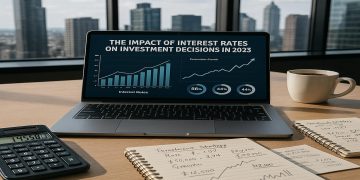
- Economic Trends: Indicators such as growth rates, inflation, and unemployment rates provide invaluable insights into market health. For instance, a rise in inflation might prompt central banks to raise interest rates, impacting borrowing costs, which in turn can slow economic growth and influence stock market performance. For example, during higher inflation periods, sectors like consumer staples may thrive as consumers prioritize essential goods.
- Geopolitical Events: Events such as elections, trade agreements, and international conflicts can significantly sway market confidence. A recent example includes the trade tensions between the U.S. and China, which resulted in fluctuating stock prices and disruptions in global supply chains. Investors must keep a close eye on political developments since they can lead to rapid shifts in market sentiment and economic forecasts.
- Currency Fluctuations: Exchange rates play a pivotal role in determining investment returns, especially for those investing in foreign assets. A strong U.S. dollar can erode the returns of American investors holding international stocks or bonds, as the value of these investments diminishes when converted back to dollars. Understanding these dynamics is vital for exploring global investment opportunities.
Strategies for Investing During Uncertain Times
In periods of market volatility, investors can adopt various strategies to safeguard their portfolios:
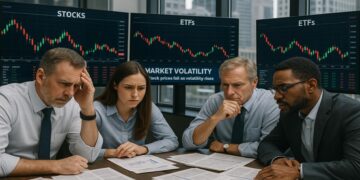
- Monitoring Market Volatility: While market fluctuations can be daunting, they also present unique investment opportunities. Historical data shows that downturns often precede recoveries, potentially offering a chance to acquire undervalued assets.
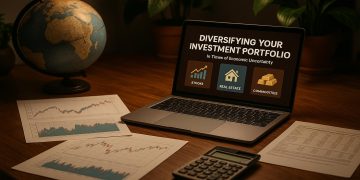
- Diversifying Asset Classes: Spreading investments across different asset classes—such as stocks, bonds, and real estate—can mitigate risks associated with any single investment sector. For instance, during economic downturns, real estate often maintains value better than stocks, providing a hedge against volatility.
- Focusing on Long-Term Strategies: Prioritizing long-term growth over short-term gains can lead to more stable investment outcomes. By embracing a buy-and-hold approach, investors can ride out market fluctuations while benefiting from compound growth over time.
As we delve deeper into the intricate relationship between the global economy and investment strategies, understanding these dynamics will empower you to make informed decisions, embracing both the challenges and opportunities presented by a constantly evolving financial landscape. By arming yourself with knowledge, you position yourself not just to survive but to thrive in the world of investments.
DISCOVER MORE: Click here to learn essential investment strategies
To navigate the complex world of investments successfully, it is crucial to understand various elements that influence investment decisions. These elements not only shape individual investment choices but also reflect broader trends in the global economy.
Economic Trends
Economic trends provide a snapshot of market health through indicators such as growth rates, inflation, and unemployment rates. For instance, when a country exhibits strong growth rates, it often signals robust consumer spending and business investment, which can lead to higher stock prices. Conversely, if inflation rises—a phenomenon where the price of goods and services increases—central banks may respond by raising interest rates. This action makes borrowing more expensive, potentially slowing down consumer spending and business expansion. A historical example of this can be seen in the late 1970s and early 1980s, where significant increases in inflation prompted the Federal Reserve to hike interest rates, leading to a recession.
Different sectors of the economy respond uniquely to these changes. For example, during periods of high inflation, sectors that deal with essential goods, such as consumer staples, tend to perform better. These companies often manage to pass on rising costs to consumers, thereby maintaining their profitability during economic hardships. In contrast, luxury goods companies might struggle as consumers cut back on non-essential purchases.
Geopolitical Events
Geopolitical events such as elections, trade agreements, and international conflicts can have profound effects on market confidence and investor sentiment. A prime example is the trade tensions between the U.S. and China, which led to varying stock market performances and disruptions in global supply chains. Such events can create uncertainty, prompting investors to rethink their strategies. For instance, when the U.S. imposed tariffs on Chinese goods, many companies that depended heavily on imported materials faced increased costs, which, in turn, affected their stock prices. Keeping a pulse on political developments allows investors to anticipate potential shifts in economic forecasts and react accordingly.
Currency Fluctuations
Currency fluctuations are another critical factor that can impact investment returns, particularly for those with global investments. For instance, a robust U.S. dollar can diminish the appeal of foreign assets. When American investors hold stocks in a country with a weaker currency, the returns may not seem as lucrative when exchanged back into dollars. This situation is essential for investors to consider as they explore international markets. The dynamics of currency exchange rates can often mean the difference between a profitable investment and a loss, making it vital to stay informed about global economic trends.
Strategies for Investing During Uncertain Times
Market volatility may induce fear among investors, but it can also yield unique opportunities. Here are some strategies to help manage investments through uncertain landscapes:
- Monitoring market volatility: Historical data shows that market downturns often precede recoveries. By carefully assessing these fluctuations, investors can identify undervalued assets to acquire at lower prices, positioning themselves for eventual gains.
- Diversifying asset classes: Investing across various asset classes—such as stocks, bonds, and real estate—can mitigate risks. For example, during an economic slump, real estate often proves more stable compared to stocks, serving as a hedge against volatility.
- Focusing on long-term strategies: Prioritizing long-term growth rather than quick wins can lead to more stable outcomes. Embracing a buy-and-hold approach allows investors to benefit from compound growth while weathering short-term market fluctuations.
In summary, comprehending the connections between economic trends, geopolitical events, and currency fluctuations equips investors with the tools needed to make informed decisions in a dynamic market. By embracing knowledge and strategic planning, you position yourself not only to navigate the challenges of investment but to thrive amid the evolving financial landscape.
DISCOVER MORE: Click here to learn how to invest in real estate on a budget
Behavioral Economics
Behavioral economics explores how psychological factors influence the decision-making processes of investors. During uncertain economic climates, emotions such as fear and greed often sway decisions more than rational analysis. For example, when stock markets experience sharp declines, it is common for investors to panic and sell off their holdings at a loss, driven by fear of further drops. This behavior can lead to missed opportunities, as history shows that markets often recover after initial downturns. Understanding these psychological biases can empower investors to remain calm and focused on long-term goals, instead of succumbing to temporary market fluctuations.
Sector Rotation
Sector rotation refers to the practice of moving investments between different sectors of the economy based on their performance during various economic cycles. For instance, in times of economic expansion, sectors such as technology and consumer discretionary typically lead the charge as consumers have more disposable income to spend. However, during economic downturns, investors might shift their focus towards defensive sectors like healthcare or utilities, which tend to be less sensitive to economic cycles. This strategy can be particularly useful during periods of market uncertainty, as it allows investors to capture gains in sectors that are more resilient to adverse economic conditions.
Investing in Alternatives
Alternative investments, such as commodities, hedge funds, and private equity, can provide diversification and offer protection against inflation and economic instability. For example, commodities like gold and oil often serve as safe havens during inflationary periods, as their values usually rise with increased currency supply. Similarly, hedge funds may employ various strategies, including short selling, to profit in both rising and falling markets. While these investments can carry higher risks and may require more sophisticated knowledge, they can be an essential part of a well-rounded investment portfolio, especially in times of uncertainty.
Utilizing Technology and Data Analytics
The rise of fintech and data analytics has greatly impacted the investment landscape, allowing investors to access a wealth of information to make informed decisions. Algorithms can analyze market trends, identify potential investments, and execute trades much faster than human capabilities. Tools such as robo-advisors offer tailored investment strategies based on individual risk tolerances and financial goals. By leveraging these technologies, investors can enhance their decision-making processes and adapt more swiftly to market changes, ultimately navigating economic uncertainty more effectively.
However, it’s essential to recognize that technological tools should complement human judgment rather than replace it. While data analytics can provide insights, the interpretation of these insights requires experience and a deep understanding of the markets. As such, investors should strive for a balance between technology and traditional investment acumen to position themselves optimally in changing economic environments.
By actively considering behavioral influences, capitalizing on sector rotations, exploring alternative investments, and utilizing technology, investors can navigate the complex landscape during uncertain times. Understanding these additional layers of the investment ecosystem can further empower individuals to make informed decisions that align with their financial objectives, regardless of broader economic challenges.
DISCOVER MORE: Click here to learn how to safely boost your credit limit
Conclusion
Navigating the complexities of the global economy can be daunting, particularly in times of uncertainty. However, by leveraging an understanding of behavioral economics, implementing sector rotation, diversifying into alternative investments, and harnessing the power of technology and data analytics, investors can position themselves to make informed decisions. Understanding that emotions, such as fear and greed, can heavily influence investment choices allows individuals to remain focused on their long-term objectives and prevents them from being swayed by short-term market fluctuations.
For example, consider a scenario where stock prices are plummeting. A common emotional reaction is to sell off shares hastily to avoid further losses. However, an investor informed by behavioral economics might recognize this impulse and instead choose to hold onto their investments, viewing the downturn as a potential buying opportunity. This perspective shift illustrates the significant role that emotional awareness plays in investment decision-making.
Additionally, employing a strategy of sector rotation can help investors capitalize on economic cycles. By actively shifting investments into sectors that tend to outperform during certain stages of the economic cycle—such as moving into consumer staples during a recession—investors can better protect their portfolios from downturns. Historical data shows that sectors like utilities and healthcare often provide stability during economic slowdowns, making them attractive options for risk-averse investors.
Exploring alternative investments can also provide crucial diversification and protection against inflation. Real estate, commodities, and private equity can serve as effective hedges, often performing differently than traditional stocks and bonds. For instance, real estate investment trusts (REITs) may provide consistent income and appreciation in value, serving as an effective counterbalance during inflationary periods.
Moreover, advancements in technology and data analytics allow investors to enhance their decision-making processes. With the rise of AI-driven investment platforms, investors can access real-time data, identify trends more efficiently, and even automate trading strategies. This technological leverage can enable quicker adjustments to evolving market conditions, enhancing an investor’s ability to respond dynamically to changes.
Ultimately, maintaining a balanced approach that combines technological insights with traditional knowledge and expertise will empower investors to navigate through tumultuous times. It is important to remember that while uncertainty is an inherent aspect of investing, being proactive and well-informed can transform challenges into opportunities. By staying adaptable and vigilant, investors can not only weather economic storms but also pursue their financial goals with greater confidence and resilience.

Linda Carter is a writer and financial consultant specializing in personal finance and money management. With years of experience helping individuals and families achieve financial stability and make informed decisions, Linda shares her expertise on the True Metronome platform. Her goal is to empower readers with practical advice and strategies to take control of their finances and build a secure future.